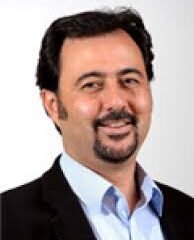


Tim Berners-Lee Closed Now
Description
Early Life and Education
Sir Timothy John Berners-Lee was born on June 8, 1955, in London, England. Both of his parents, Conway Berners-Lee and Mary Lee Woods, were computer scientists who worked on the pioneering Ferranti Mark 1, the world’s first commercially available general-purpose computer. Growing up in a home where conversations about mathematics and computing were commonplace, Berners-Lee developed a deep curiosity for how information could be processed and shared.
He attended Emanuel School in London before earning a bachelor’s degree in physics from The Queen’s College, University of Oxford, in 1976. While at Oxford, Berners-Lee built his first computer using spare parts, including a television set as a display, reflecting his early resourcefulness in problem-solving.
Early Career and CERN Experience
Berners-Lee began his career as an engineer at Plessey Telecommunications, working on distributed transaction systems. Later, he joined D.G. Nash, where he developed typesetting software for printers. In 1980, while working as a software engineer at CERN, the European Organization for Nuclear Research, he proposed a project to facilitate information sharing among scientists.
It was during his second tenure at CERN in 1989 that he envisioned the concept of a global hypertext system. This vision laid the foundation for the creation of the World Wide Web.
The Birth of the World Wide Web
In 1989–1990, Berners-Lee developed the first web browser (WorldWideWeb, later renamed Nexus) and the first web server (CERN HTTPd). He also created foundational technologies for the web: HTML (Hypertext Markup Language), HTTP (Hypertext Transfer Protocol), and URLs (Uniform Resource Locators).
The first website, hosted at CERN, went live on August 6, 1991, marking the beginning of the web as we know it today. Berners-Lee’s vision was for the web to be universally accessible, decentralized, and open to all, without proprietary restrictions
Academic and Advocacy Work
In 1994, Berners-Lee founded the World Wide Web Consortium (W3C) at the Massachusetts Institute of Technology (MIT). The W3C develops open standards to ensure the long-term growth of the web. As director, Berners-Lee has consistently advocated for net neutrality, privacy, and the prevention of monopolization of web infrastructure.
He has also co-founded the World Wide Web Foundation, focusing on advancing the open web as a public good and a basic right.
Awards and Global Recognition
Berners-Lee has been knighted by Queen Elizabeth II for his contributions to the internet. He has received numerous awards, including the Turing Award (2016) for inventing the World Wide Web and the Millennium Technology Prize (2004). His work has had a transformative impact on communication, commerce, education, and society at large.
Continued Work and Vision
In recent years, Berners-Lee has turned his attention to data privacy and the decentralization of the web. Through his startup, Inrupt, he promotes the Solid platform, which aims to give users control over their personal data. His ongoing mission is to protect the open and free nature of the internet for future generations
-
Last work experience
World Wide Web Consortium (W3C) / Inrupt Inc -
Start Date
1994-01-01 -
End Date
2025-08-12 -
Position
Director -
Description
Inventor of the World Wide Web — Champion of Open Internet Standards and Digital Freedom
-
Visite Site
Visite Site -
Area of Specialization
Information Technology
Map View
Location