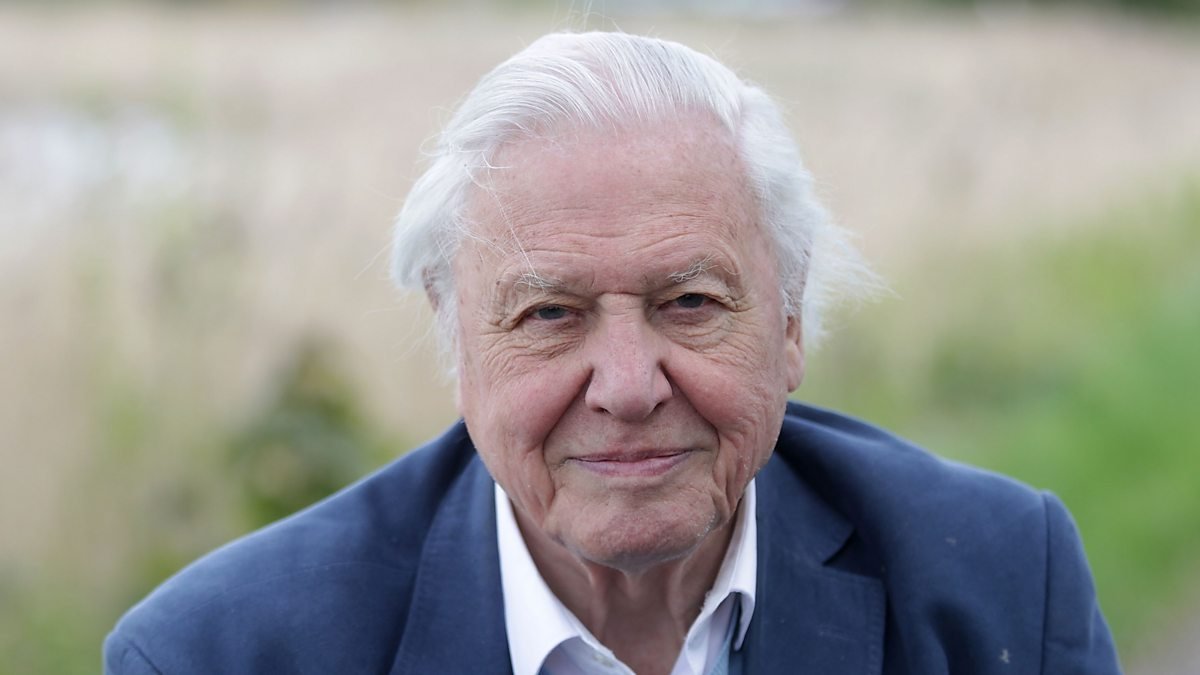

Sir David Attenborough Closed Now
Description
Early Life and Education
Sir David Frederick Attenborough was born on May 8, 1926, in London, England, and grew up in Leicester. His father was the principal of University College, Leicester, and his family’s home was often filled with books, maps, and academic visitors. Attenborough developed a fascination with the natural world at an early age, collecting fossils, stones, and other natural specimens. He studied natural sciences at the University of Cambridge, specializing in geology and zoology, which laid the foundation for his lifelong career in natural history.
Entry into Broadcasting and Storytelling
In 1952, Attenborough joined the BBC as a producer and soon became a pioneer in wildlife broadcasting. His early work included the groundbreaking Zoo Quest series, which brought exotic animals and distant landscapes into viewers’ homes for the first time. His style—combining scientific accuracy with poetic storytelling—quickly earned him a devoted audience.
Advocacy for Sustainable Infrastructure
While Attenborough is best known for his nature documentaries, his later work increasingly addressed the urgent need for sustainable infrastructure to protect ecosystems and human livelihoods. In documentaries such as Our Planet and A Life on Our Planet, he highlighted how unsustainable urbanization, deforestation, and industrial growth threaten biodiversity and climate stability.
He advocates for infrastructure that works with nature rather than against it—such as green cities, renewable energy grids, sustainable transport systems, and restored wetlands that provide natural flood defenses.
Global Environmental Influence
Attenborough’s influence extends far beyond the television screen. He has spoken at the United Nations, COP climate summits, and the World Economic Forum, urging world leaders to prioritize low-carbon, nature-friendly infrastructure. He emphasizes that decisions made today will shape the Earth’s livability for centuries.
His voice carries moral authority, particularly when connecting climate change, infrastructure choices, and the fate of the planet’s biodiversity. Through accessible storytelling, he has mobilized millions to demand systemic change.
Recent Work and Initiatives
In recent years, Attenborough has focused his efforts on campaigns promoting a green transition in infrastructure. In Our Planet: Too Big to Fail, he partnered with WWF and finance leaders to show how investments can drive sustainable infrastructure globally.
He supports initiatives like urban tree planting, renewable energy-powered transport, and ecological restoration projects that double as protective infrastructure against extreme weather events.
Publications and Documentaries
Attenborough has authored over 20 books and narrated some of the most iconic natural history series in television history, including The Blue Planet, Planet Earth, and Our Planet. His 2020 memoir, A Life on Our Planet, doubles as a manifesto for building sustainable systems and infrastructure that respect environmental limits.
Awards and Recognition
Knighted in 1985 and later awarded the Order of Merit in 2005, Attenborough’s accolades also include multiple BAFTAs, Emmy Awards, and international environmental honors. In 2019, the British government named a new polar research vessel the RRS Sir David Attenborough in recognition of his contributions to science and conservation.
Legacy and Impact
Attenborough’s legacy is twofold: transforming the way the world understands and loves nature, and linking that understanding to practical changes in infrastructure and policy. His advocacy for sustainable infrastructure is rooted in a belief that humanity’s survival depends on designing systems that integrate with the planet’s ecological processes rather than disrupt them.
-
Last work experience
BBC Natural History Unit / Netflix (Our Planet, A Life on Our Planet) -
Start Date
2017-01-01 -
End Date
2025-08-13 -
Description
Legendary broadcaster, natural historian, and global advocate for sustainable infrastructure and biodiversity conservation
-
Area of Specialization
Sustainable Infrastructure -
Link to my website
Link to my website
Map View
Location