
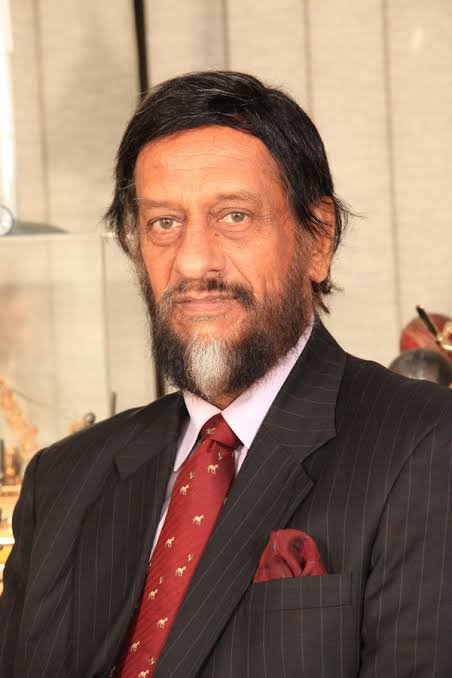

Rajendra K. Pachauri Closed Now
Description
Early Life and Academic Background
Rajendra Kumar Pachauri was born in 1940 in Nainital, India. He pursued mechanical engineering at the Indian Railways Institute of Mechanical and Electrical Engineering, later earning a Master’s and Ph.D. in Industrial Engineering and Economics from North Carolina State University, USA.
His interdisciplinary background—bridging engineering, economics, and policy—positioned him uniquely to address the challenges of sustainable development and infrastructure in a rapidly globalizing world.
Career at TERI (The Energy and Resources Institute)
Building TERI as a Global Institution
In 1981, Pachauri became Director of the Tata Energy Research Institute (later The Energy and Resources Institute, TERI) in New Delhi. Under his leadership, TERI transformed from a small research body into a globally recognized think tank specializing in energy efficiency, sustainable urban development, renewable energy, and climate policy.
TERI spearheaded projects that integrated clean technologies into infrastructure, focusing on solar power, green buildings, and rural electrification. Pachauri’s vision was that infrastructure must meet economic needs while preserving ecological balance.
Chairman of the Intergovernmental Panel on Climate Change (IPCC)
Nobel Peace Prize Contribution
In 2002, Pachauri was elected as the Chairman of the IPCC, the United Nations body assessing climate science. During his leadership, the IPCC released the Fourth Assessment Report (2007), which provided undeniable evidence of human-induced climate change.
For this effort, the IPCC and Al Gore jointly received the Nobel Peace Prize in 2007, a landmark recognition that highlighted the role of sustainable infrastructure in mitigating climate change.
Infrastructure and Climate Adaptation
The IPCC’s reports under Pachauri emphasized:
-
The need for low-carbon transport systems
-
Resilient coastal and urban infrastructure to withstand climate impacts
-
The importance of renewable energy integration in power grids
-
Equity in infrastructure financing between developed and developing nations
His advocacy helped shift infrastructure debates globally from cost efficiency toward climate resilience and long-term sustainability.
Global Advocacy and Influence
United Nations and World Bank Engagement
Pachauri frequently advised the United Nations, World Bank, and national governments on strategies for integrating sustainability into infrastructure. He stressed that urbanization, if not guided by green principles, would become the single biggest challenge to sustainable development.
Promoting Sustainable Energy Access
He championed energy access for marginalized communities, arguing that infrastructure must not only be green but also inclusive, ensuring equitable access to clean energy, water, and transportation.
Publications and Thought Leadership
Pachauri authored and co-authored numerous books and research papers on energy, economics, and sustainable infrastructure. His writings often underscored the idea that climate action is inseparable from infrastructure development.
His book Global Commons and Climate Change remains a reference for policymakers worldwide.
Awards and Recognition
-
Nobel Peace Prize (2007), shared with the IPCC
-
Padma Bhushan (2001) and Padma Vibhushan (2008), among India’s highest civilian honors
-
Numerous international environmental awards, including the Zayed International Prize for the Environment
Philosophy and Legacy
Pachauri firmly believed that climate change was the defining challenge of the 21st century, and sustainable infrastructure was at the heart of the solution.
His legacy lies in making sustainability a mainstream policy concern. Despite later facing personal controversies, his contributions to climate science and sustainable infrastructure remain globally significant.
-
Last work experience
The Energy and Resources Institute (TERI) -
Start Date
2025-08-19 -
End Date
2025-08-19 -
Position
Director -
Description
Former Chairman of the Intergovernmental Panel on Climate Change (IPCC) and Nobel Peace Prize co-laureate, known for advancing global awareness of sustainable infrastructure and climate change adaptation.
-
Area of Specialization
Sustainable Infrastructure -
Link to my website
Link to my website
Map View
Location