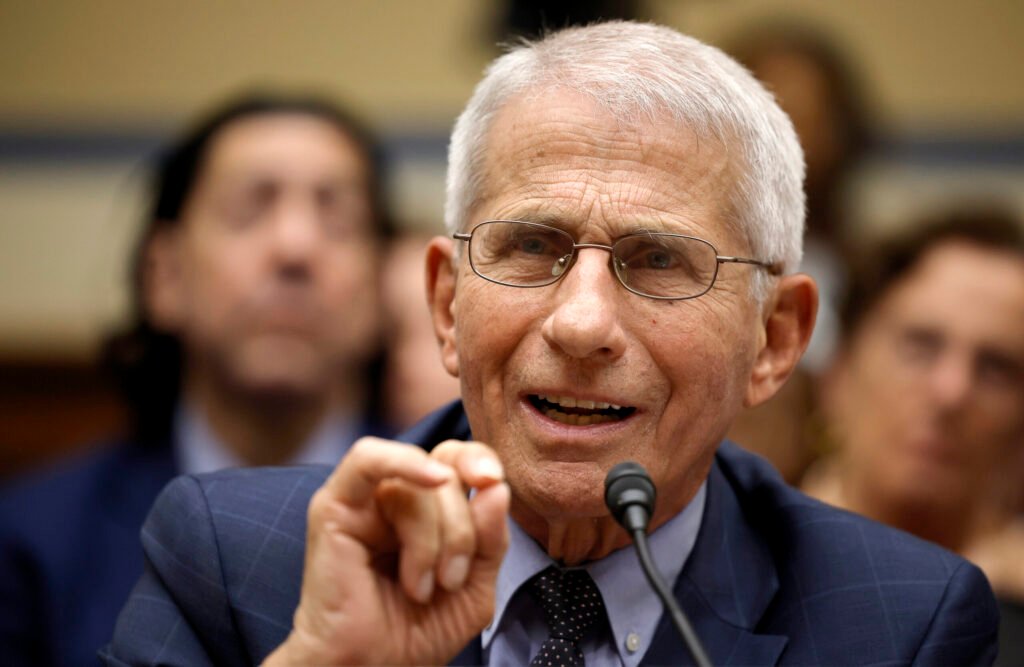

Dr. Anthony Fauci Closed Now
Description
Early Life and Education
Anthony Stephen Fauci was born on December 24, 1940, in Brooklyn, New York, USA. From a young age, he showed an interest in science and medicine. He pursued his undergraduate studies at the College of the Holy Cross, where he earned a degree in classical studies with a pre-medical focus in 1962. He later obtained his Doctor of Medicine (MD) from Cornell University Medical College in 1966.
Fauci completed his internship and residency in internal medicine at New York Hospital–Cornell Medical Center, before joining the National Institutes of Health (NIH) in 1968 as a clinical associate.
Career at the National Institutes of Health
Dr. Fauci has spent more than five decades at NIH, making him one of the most enduring and influential public health leaders in the world. He rose to become the Director of the National Institute of Allergy and Infectious Diseases (NIAID) in 1984, a position he held until 2022.
At NIAID, Fauci oversaw extensive research portfolios focusing on HIV/AIDS, respiratory infections, tuberculosis, malaria, Ebola, and emerging infectious diseases. He managed both laboratory and clinical research, ensuring a balance between fundamental science and real-world application.
Contributions to HIV/AIDS and Global Health
Fauci became widely known in the 1980s for his research and leadership during the HIV/AIDS epidemic. Despite initial criticism from activist groups, he later became one of their strongest allies, advocating for accelerated drug approvals and improved access to treatment.
He played a central role in developing antiretroviral therapies that transformed HIV/AIDS from a fatal illness into a manageable chronic condition. Fauci also worked on President George W. Bush’s PEPFAR (President’s Emergency Plan for AIDS Relief), which has saved millions of lives worldwide.
Role During Epidemics and Pandemics
Over the years, Dr. Fauci advised multiple U.S. presidents on major outbreaks, including SARS (2003), H1N1 influenza (2009), Ebola (2014), Zika virus (2016), and COVID-19 (2020-2022).
His ability to translate complex epidemiological data into clear communication made him a trusted voice during times of uncertainty.
Leadership During COVID-19 Pandemic
Dr. Fauci became one of the most recognizable figures worldwide during the COVID-19 pandemic. As the Chief Medical Advisor to the President of the United States under Joe Biden, and previously a key member of the White House Coronavirus Task Force under Donald Trump, Fauci provided evidence-based guidance on:
-
Mask-wearing and preventive measures.
-
Vaccine development and rollout.
-
Addressing misinformation about COVID-19.
His scientific credibility and steady demeanor made him a respected figure, though he also faced political challenges and public criticism in a polarized environment.
Recognition and Influence
Dr. Fauci has received more than 50 honorary doctorates from universities around the world and numerous awards, including the Presidential Medal of Freedom (2008), the Lasker Award for Public Service, and recognition in global rankings as one of the world’s most influential scientists.
He has published over 1,300 scientific papers, making him one of the most prolific epidemiologists and immunologists in history.
Legacy and Impact
Anthony Fauci’s career demonstrates the intersection of science, medicine, and public policy. His legacy includes not only groundbreaking contributions to infectious disease research but also his role as a public communicator of science during crises.
His work continues to inspire epidemiologists, public health professionals, and medical researchers worldwide.
-
Last work experience
National Institute of Allergy and Infectious Diseases (NIAID), NIH -
Start Date
1984-01-01 -
End Date
2022-01-01 -
Position
Director -
Description
Renowned American epidemiologist and immunologist; Former Director of NIAID and Chief Medical Advisor to the U.S. President.
-
Area of Specialization
Epidemiology -
Link to my website
Link to my website
Map View
Location