Gro Harlem Brundtland Closed Now
Description
Early Life and Education
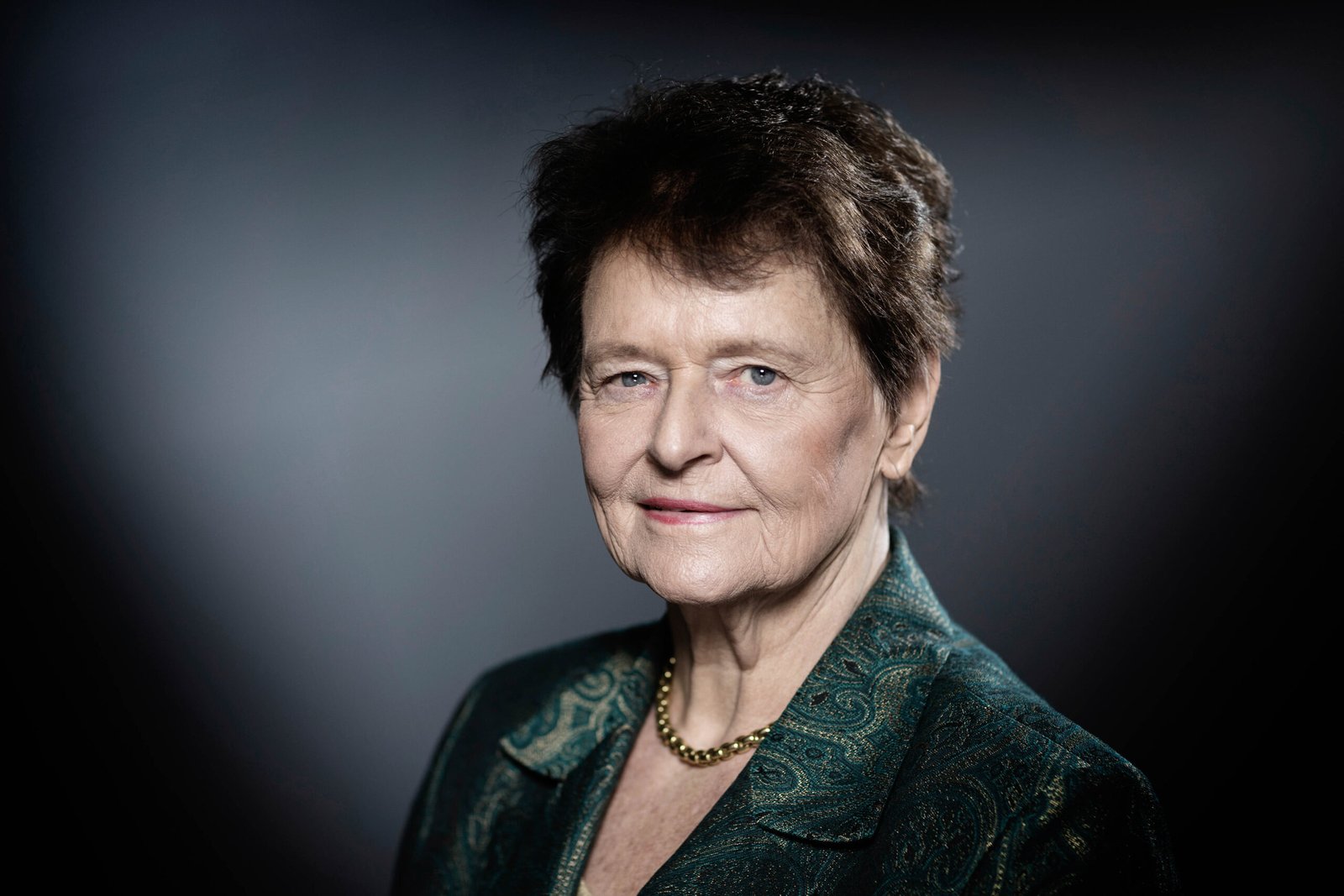
Gro Harlem Brundtland was born in Oslo, Norway, in 1939. From an early age, she was deeply influenced by her family’s commitment to public service and health. She pursued her education in medicine, earning her Medical Degree from the University of Oslo in 1963 and later a Master’s in Public Health from Harvard University in 1965. Her training as a physician instilled in her a profound understanding of the interconnections between human health, the environment, and social welfare—an understanding that would later become the cornerstone of her approach to sustainable infrastructure.
Political Career in Norway
Brundtland began her career as a medical officer before entering politics in the 1970s. She quickly rose to prominence within the Labour Party, eventually serving as the Prime Minister of Norway for three terms (1981, 1986–1989, and 1990–1996).
During her tenure as Prime Minister, she promoted progressive policies that balanced economic growth with environmental protection. She implemented reforms in health, education, and infrastructure, emphasizing that infrastructure should not only serve immediate needs but also secure the well-being of future generations.
Chairing the World Commission on Environment and Development
The Brundtland Report
In 1983, Brundtland was appointed as Chair of the World Commission on Environment and Development (WCED) by the United Nations. Four years later, the Commission published the landmark Brundtland Report (1987), titled Our Common Future.
This report was revolutionary: it introduced the concept of sustainable development, defining it as “development that meets the needs of the present without compromising the ability of future generations to meet their own needs.”
Impact on Sustainable Infrastructure
The Brundtland Report laid the groundwork for how governments, international organizations, and corporations view infrastructure projects. It emphasized:
-
Long-term resilience over short-term gains
-
The integration of environmental considerations in economic planning
-
The importance of equity between developed and developing nations in infrastructure development
Her vision transformed the global policy landscape, making sustainability a central pillar of infrastructure planning.
Director-General of the World Health Organization (WHO)
In 1998, Brundtland became the Director-General of the World Health Organization (WHO). At WHO, she applied her sustainable development philosophy to global health infrastructure. She championed programs targeting the reduction of infectious diseases, tobacco control, and emergency health preparedness—all crucial components of building resilient societies.
Major Contributions to Sustainable Infrastructure
-
Integrating Health and Environment
Brundtland highlighted how health systems are deeply dependent on sustainable infrastructure, such as clean water, sanitation, and resilient hospitals. -
Climate Change Advocacy
She was among the first world leaders to warn that climate change posed an existential threat and demanded large-scale infrastructure adaptation. -
Global Policy Influence
Her leadership influenced the 1992 Earth Summit in Rio de Janeiro and paved the way for the UN Sustainable Development Goals (SDGs) adopted in 2015.
Recognition and Awards
-
Called the “Mother of Sustainable Development”
-
Recipient of the Indira Gandhi Prize and numerous honorary doctorates
-
Listed among the 100 Most Powerful Women by Forbes
-
Member of The Elders, a group of global leaders founded by Nelson Mandela to promote peace and sustainability
Philosophy and Vision
Brundtland’s philosophy is anchored in the belief that social equity, economic progress, and environmental protection are inseparable. For her, sustainable infrastructure must prioritize human well-being, not just economic growth.
She continues to advocate for global climate action, urging nations to transition toward renewable energy, sustainable urban planning, and resilient infrastructure systems. Her work has inspired a generation of leaders and policymakers to approach infrastructure with a holistic, long-term perspective.
-
Last work experience
World Health Organization (WHO) -
Start Date
1998-01-01 -
End Date
2003-01-01 -
Position
Director -
Description
Former Prime Minister of Norway and Chair of the World Commission on Environment and Development, widely recognized as the “Mother of Sustainable Development.”
-
Area of Specialization
Sustainable Infrastructure -
Link to my website
Link to my website