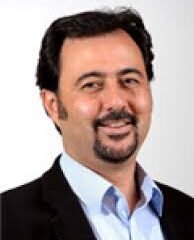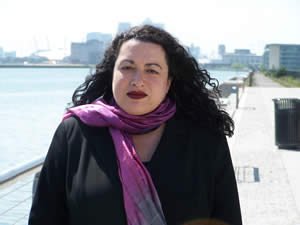
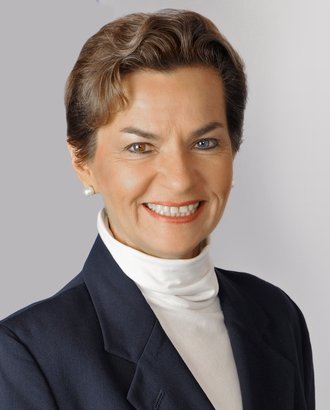

Christiana Figueres Closed Now
Description
Early Life and Education
Christiana Figueres, born in 1956 in Costa Rica, grew up in a politically active family—her father served as President of Costa Rica, and her mother was Costa Rica’s ambassador to Israel. This environment instilled in her a deep commitment to public service, diplomacy, and environmental stewardship. She earned a master’s degree in social anthropology from the London School of Economics and pursued further studies in sustainable development at Georgetown University.
Path to Climate Leadership
Before becoming an internationally recognized climate leader, Figueres worked in multiple roles related to sustainable development, renewable energy, and environmental diplomacy. She served in the Costa Rican Embassy in Germany and later founded the Center for Sustainable Development of the Americas (CSDA), focusing on climate change capacity building in Latin America.
Her career trajectory took a significant leap when she became a member of the Costa Rican negotiating team for the United Nations Framework Convention on Climate Change (UNFCCC) in the mid-1990s. Over time, her reputation for combining diplomacy with strategic vision made her a respected figure in global climate negotiations.
Leadership at the UNFCCC
In 2010, Figueres was appointed Executive Secretary of the UNFCCC, taking over after the difficult Copenhagen climate talks of 2009. Her tenure was marked by a transformational approach—rebuilding trust among nations, reframing climate change as both a challenge and an opportunity, and emphasizing collaborative action.
Her most significant achievement was guiding the negotiations that led to the Paris Agreement in 2015, a historic accord signed by nearly every nation on Earth. The agreement’s goal—to limit global warming to well below 2°C—was a direct result of her persistent diplomacy, coalition building, and ability to bridge divides between developed and developing nations.
Focus on Sustainable Infrastructure
After leaving the UNFCCC in 2016, Figueres shifted her focus toward advocating for sustainable infrastructure investment as a cornerstone of climate action. She emphasizes that infrastructure built today will lock in emissions patterns for decades; therefore, low-carbon, climate-resilient infrastructure is essential for meeting global climate goals.
Her work champions projects that integrate renewable energy, circular economy principles, sustainable urban design, and nature-based solutions. Whether in transportation, energy grids, water systems, or buildings, her approach views infrastructure as an enabler of sustainable, equitable growth.
Current Roles and Initiatives
Figueres co-founded Global Optimism, an organization dedicated to accelerating climate action through partnerships, advocacy, and storytelling. She also co-hosts the Outrage + Optimism podcast, where she engages with leaders from politics, business, and civil society on pathways to a regenerative future.
She sits on several boards, including those of the Global Covenant of Mayors for Climate & Energy, the B Team, and the World Resources Institute. Her advocacy extends to sustainable finance, encouraging investors to divest from fossil fuels and direct capital toward green infrastructure projects.
Publications and Thought Leadership
In 2020, Figueres co-authored The Future We Choose: Surviving the Climate Crisis with Tom Rivett-Carnac. The book outlines two possible futures—one of inaction leading to catastrophic climate impacts, and one of decisive action leading to a thriving, sustainable world. It serves as both a warning and a manual for action, aligning strongly with her infrastructure-focused messaging.
Awards and Recognition
Figueres has received numerous honors, including the Order of Merit of Germany, the Legion of Honor of France, and recognition from TIME magazine as one of the 100 most influential people in the world. Her ability to blend political strategy, technical understanding, and moral urgency makes her a unique and powerful advocate for sustainable infrastructure.
Legacy and Impact
Her legacy lies in proving that global cooperation on climate change is possible, and that infrastructure investment can be a central driver of both economic development and environmental protection. By linking the urgency of climate action to tangible infrastructure decisions, she has influenced governments, corporations, and civil society worldwide.
-
Last work experience
United Nations Framework Convention on Climate Change (UNFCCC) -
Start Date
2010-01-01 -
End Date
2016-01-01 -
Position
Assistant -
Description
Former UN Climate Chief; architect of the Paris Agreement; advocate for sustainable infrastructure and climate resilience
-
Visite Site
Visite Site -
Area of Specialization
Sustainable Infrastructure -
Link to my website
Link to my website