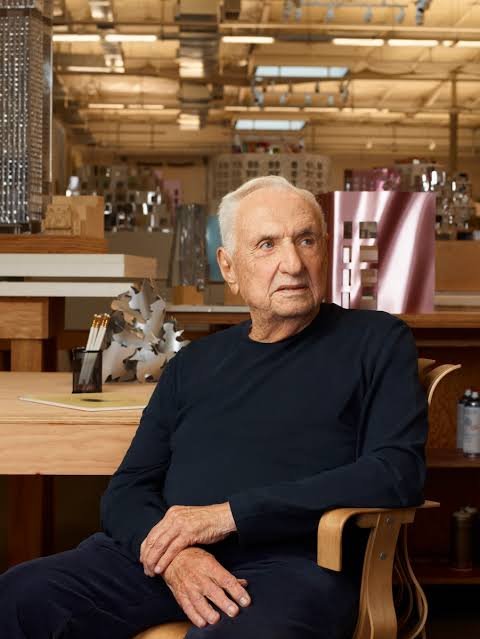

Frank Gehry Closed Now
Description
Early Life and Education
Frank Owen Gehry was born on February 28, 1929, in Toronto, Canada. As a child, Gehry often built imaginary cities from scraps of wood provided by his grandmother, sparking his passion for architecture and design. In 1947, his family moved to Los Angeles, USA. Gehry later attended the University of Southern California (USC), where he earned a degree in architecture. He also studied city planning at Harvard Graduate School of Design.
Early Career
Gehry started his career at various architecture firms, including Victor Gruen Associates and Pereira & Luckman. In 1962, he opened his own firm, Gehry Partners, LLP, in Los Angeles. Initially, his work was rooted in modernism, but he soon developed a distinct style that broke traditional architectural norms.
Design Philosophy
Gehry is often associated with Deconstructivism, an architectural movement characterized by fragmented, asymmetrical forms and unconventional materials. His designs often appear chaotic yet are meticulously planned, reflecting both artistic creativity and engineering precision.
He is known for experimenting with materials such as corrugated metal, titanium, and chain-link fencing, turning them into elements of beauty. Gehry believes architecture should evoke emotion and challenge perceptions, blending sculpture with functionality.
Notable Works
Frank Gehry’s most famous projects include:
-
Guggenheim Museum Bilbao (Spain, 1997) – A titanium-clad marvel that revitalized an entire city’s economy.
-
Walt Disney Concert Hall (Los Angeles, USA, 2003) – A stainless steel masterpiece with exceptional acoustics.
-
Dancing House (Prague, Czech Republic, 1996) – A whimsical building that appears to sway and dance.
-
Louis Vuitton Foundation (Paris, France, 2014) – A glass and steel cultural landmark.
-
8 Spruce Street (New York, USA, 2011) – A striking residential skyscraper with rippling façades.
Cultural Impact
Gehry’s work often transcends architecture, influencing art, culture, and urban development. The “Bilbao Effect,” named after the Guggenheim Museum Bilbao, describes how a single architectural landmark can transform the economic and cultural fortunes of a city.
Recognition and Awards
Frank Gehry has received numerous awards, including:
-
Pritzker Architecture Prize (1989) – The highest honor in architecture.
-
National Medal of Arts (1998)
-
Order of Canada (Companion, 2002)
-
AIA Gold Medal (1999)
-
Several honorary doctorates from universities worldwide.
Recent Work and Legacy
Even in his 90s, Gehry remains active in the field, working on projects such as the Facebook headquarters campus in California and residential towers in Toronto. His legacy lies not only in his iconic buildings but also in his philosophy of pushing boundaries and embracing innovation.
-
Last work experience
Gehry Partners, LLP -
Start Date
1962-01-01 -
End Date
2025-08-13 -
Position
Co Founder -
Description
Iconic Architect and Designer, Known for Deconstructivist Masterpieces
-
Area of Specialization
Design & Creative -
Link to my website
Link to my website