
Desmond Mpilo Tutu Closed Now
Description
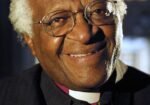
Archbishop Desmond Mpilo Tutu (1931–2021) was one of the most influential moral leaders of the 20th century, whose legacy in transitional justice, reconciliation, and human rights continues to shape the world. As an Anglican cleric and theologian, he rose to international prominence for his fearless opposition to apartheid in South Africa, advocating for nonviolent resistance and human dignity.
Following the fall of apartheid, Tutu was appointed by President Nelson Mandela as the Chair of South Africa’s Truth and Reconciliation Commission (TRC) (1996–2003). Under his leadership, the TRC became a pioneering model for transitional justice, combining public testimony, amnesty provisions, and victim-centered hearings to address decades of systemic injustice and violence. The Commission emphasized the values of truth-telling, forgiveness, and restorative justice, reflecting Tutu’s deep commitment to the philosophy of ubuntu — the belief in shared humanity and interdependence.
Tutu’s approach to justice was distinct: rather than focusing solely on punishment, he emphasized reconciliation and healing, arguing that sustainable peace required both accountability and the restoration of relationships. This vision influenced transitional justice efforts globally, inspiring truth commissions and reconciliation processes in countries across Latin America, Africa, and Asia.
Beyond the TRC, Tutu was a lifelong advocate for global human rights. He spoke out against poverty, racism, gender inequality, and homophobia, often challenging both political leaders and religious institutions. His advocacy earned him the Nobel Peace Prize in 1984, recognizing his leadership in the struggle against apartheid.
Even after retirement, he remained an active voice in global justice debates, lending support to movements for peace, climate justice, and LGBTQ+ rights.
Desmond Tutu’s work demonstrated that transitional justice is not only about institutions and laws but also about moral courage, compassion, and the possibility of healing broken societies through truth and forgiveness.
-
Last work experience
Truth and Reconciliation Commission of South Africa Anglican Church of Southern Africa -
Start Date
1996-01-01 -
End Date
2003-01-01 -
Description
Archbishop and Chair of South Africa’s Truth and Reconciliation Commission
-
Visite Site
Visite Site -
Area of Specialization
Transitional Justice -
Link to my website
Link to my website